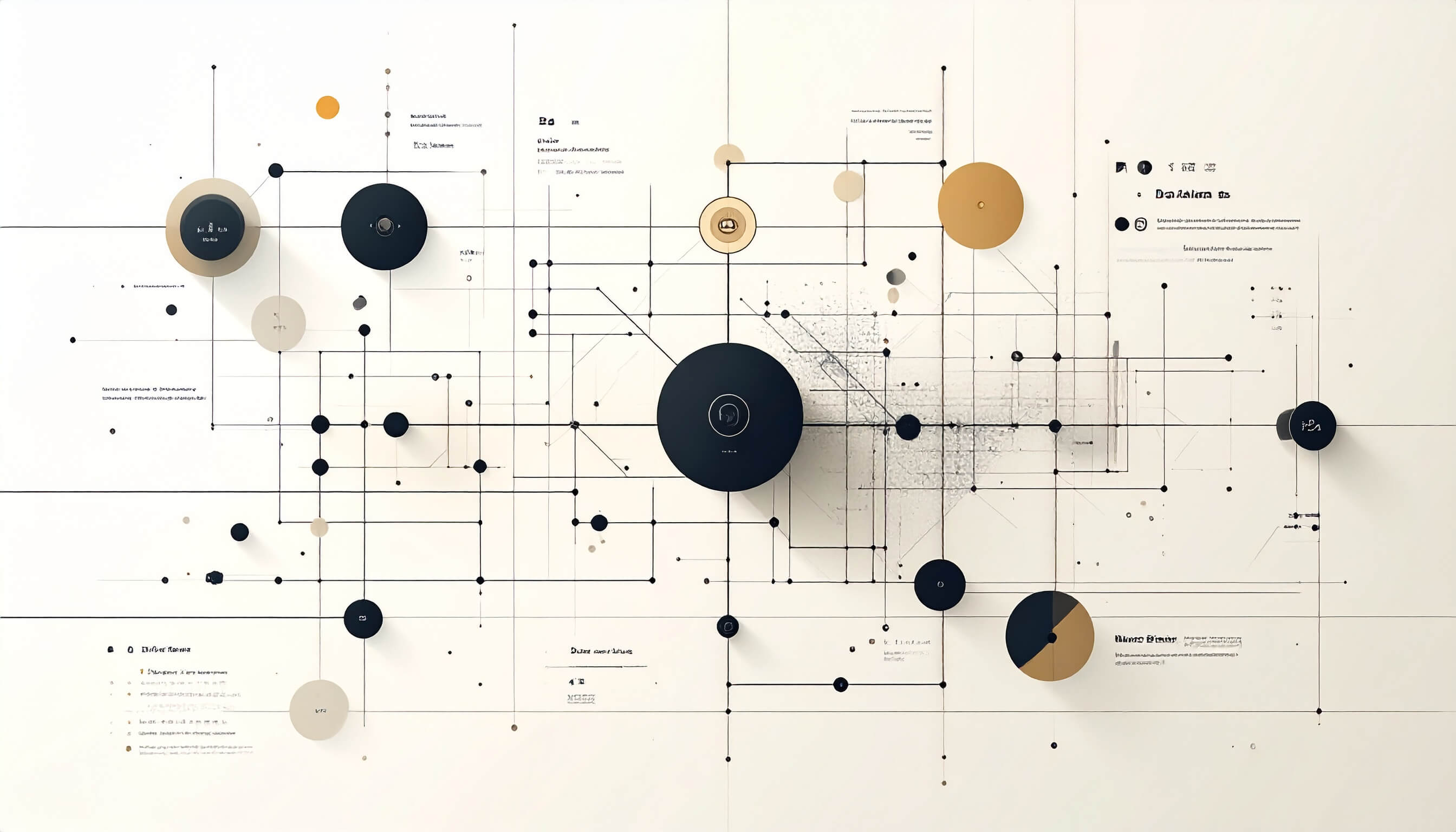
I am building an operating system for a one-person business — not a tool, but the connective tissue between four blogs, an official site, business metrics, a daily report, and a working arrangement with AI agents.
The reason is simple. Writing more posts does not tell you which post to grow, where to place a route, what to rewrite, or which site deserves your time. Without a system for those decisions, it does not last.
This is a record of something in progress, not a success story.
Originally published in Japanese on May 20, 2026. This English version was written in September 2026.
The output is a system, not articles
Each blog used to be an independent place: one for fishing, one for travel and food, one for gifts and gear, one for web and AI. Each meaningful on its own, and scattered when viewed as a business.
There were posts, readers, search traffic, and a little revenue. What was weak was whether any of that fed a decision about what to do next. Which post to grow, where to put a route, what to rewrite, where to spend time — all of it ran on instinct.
So the first move was rebuilding the blogs as media properties.
Four blogs, rebuilt on shared principles
Through May 2026 the four sites were rebuilt in sequence. monoomoi.net as a publication about gifts and household goods. moss.fish as a first-hand record of fishing, the outdoors, and rural living. isLog as a record of the travel and food inside ordinary life. And taupe.site as a record of using the web and AI to arrange work and daily life.
They were never meant to look identical. Some sites communicate through photographs, some suit product coverage, some read on the atmosphere of travel and food, and taupe works better through structure and words than images.
The point was shared principles, not shared design. What does this publication cover, who runs it, which post is the entrance, and where does the route to the official site sit? Those relationships were settled one at a time.
My work as a whole is collected at ishikawa.co. Each blog is both an entrance to that and a publication read on its own — deliberately not a sales funnel. Read an article, learn who wrote it, and continue to the official site or the contact page only if you need to. That distance is right for now.
A defined role changes what you measure
Reviewing the blogs made one thing obvious: once a role is fixed, decisions get easier.
monoomoi grows product reviews, comparisons, and gift-selection routes. moss deepens trip reports, gear reviews, and outdoor experience. isLog organizes travel and food into series and builds entrances by region and experience. taupe records practice in web, AI, automation, workspace, and personal projects.
With roles vague, every post and every fix is a vague improvement. With roles fixed, the metric changes too: search traffic here, clicks there, revenue somewhere else, referrals to the official site, or how AI systems perceive the site.
Making a blog into a publication is not a visual change. It is building the footing to move from.
Reading numbers over a window, not a day
Finishing a rebuild does not produce a verdict. Search reflects with a lag, clicks wobble day to day, and revenue cannot be judged per article quickly.
So short-term movement does not get called success or failure. Day 7 for anomalies, day 14 for early direction, day 28 for movement in search, navigation, and commercial routes. Observing on that timescale removes most of the false urgency.
The numbers are not there for daily mood. They are there to decide where the time goes — because writing time, rewriting time, and route-fixing time are all limited, and moving on instinct scatters them immediately.
Stop patrolling dashboards; build one place to look
GA4, Search Console, AdSense, affiliate networks, clicks, referrals originating from AI services. That is a lot of surfaces, and opening each console daily does not survive as a habit — you end up patrolling rather than seeing, and it is tiring.
So the necessary figures are collected into a spreadsheet and reviewed daily. Each morning: the previous day’s state, which URLs grew, which queries appeared, which routes produced clicks, referrals to the official site and service pages, and whether anything arrived via an AI service.
If all you want is a traffic report, email is enough. What I wanted was material for the next decision: what to write, what to fix, which publication gets the time, which route gets grown. One place that supports that.
Agents as a team, not as a writer
Most of this work happens alongside AI, and none of it is “AI writes my blog.” That version would not have been interesting enough to keep doing.
There is far more to delegate than prose: organizing direction, working out structure, writing the implementation handoff, reviewing code, running QA before and after publishing, organizing how to read the numbers, and surfacing the next question worth asking. Editor, implementer, analyst, and producer at once.
The final judgment is still mine: what to publish, what phrasing to use, how much sales tone is acceptable, what not to do right now. What changed is that the work no longer feels like thinking alone — which turns out to be the largest effect.
Solo, without thinking solo
Running publications alone pulls you toward whatever is in front of you: is this heading right, is this route prominent enough, how is the whitespace on this page, is this CSS broken? All real, and all local.
The questions that get lost are structural. How does this publication connect to the official site? What is this article’s job for the reader? Is this route there to increase inquiries, or to improve the quality of the ones that arrive? Should this improvement happen now, or after seeing the numbers in fourteen days?
Talking to an agent, those questions get asked from the outside. Less an automation tool than something to think about the business with.
Articles, routes, revenue, and services as one flow
Organize the blogs as publications, connect them to the official site, look at the numbers, decide with the agents, write when writing is warranted, fix a route when a route needs fixing, and reconsider how a service is presented when that is the constraint. One continuous loop rather than separate jobs.
On taupe, this record lives under build; implementation and operational notes sit closer to record; workspace and tooling continue into arrange. Those hub pages are on the Japanese side of the site.
Articles do not end as articles. Routes are not considered in isolation. Revenue is not read on its own. Services are not pushed hard. Not over-separated, not over-mixed, shaped so a one-person business can actually turn.
Unfinished, but moving
The system is not complete. The four blogs were only just rebuilt, the numbers are only entering their 7-, 14-, and 28-day observation, and how AI systems recognize and refer traffic to the sites still needs steady observation before anything can be claimed about it.
So this is not a success story. It is a record of construction in progress.
What is different from before is that writing, reading numbers, talking with agents, thinking about routes, and organizing how work arrives have stopped being separate activities and started connecting as one flow.
The goal was never to mass-produce articles with AI. It was to think about the structure of my own business with it — arrange the publications, look at the numbers, and get into a state where decisions are possible. That is the operating system being built, a piece at a time.