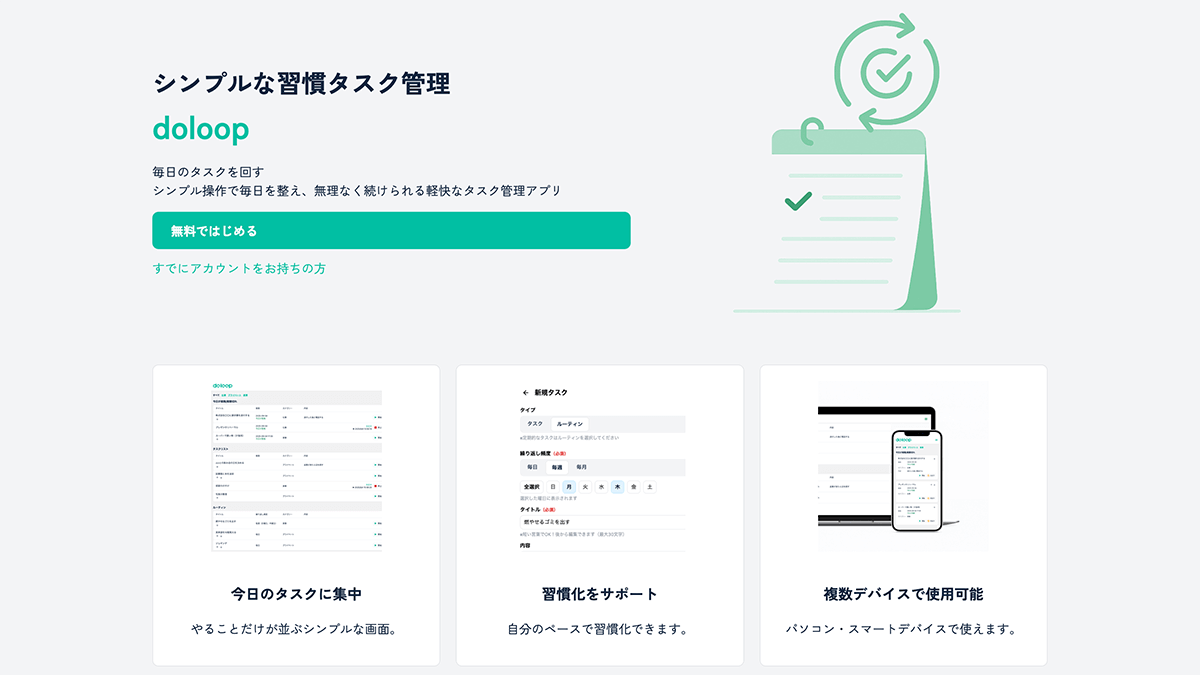
Status: discontinued. doloop is no longer running. The service was shut down in 2026 and the domain it lived on, doloop.life, no longer resolves — I checked again in September 2026 and it returns nothing. There is no sign-up, no export, and no successor product. This article is kept online as a record of something I built and operated, not as a pointer to a service you can use.
doloop was a small web app for daily tasks and repeating habits. I released it on January 1, 2026, ran it for a while, and eventually took it down. What follows is what I was trying to build and the design decisions behind it, written from the original release notes.
Originally published in Japanese on January 1, 2026. This English version was written in September 2026.
It came out of a bigger question I keep circling: how one person actually runs their own products and media without the operations swallowing the work. I wrote about that setup in more detail in an article about running a solo business with an AI team (in Japanese). doloop was one small experiment inside that.
The problem: task managers that become the task
There is no shortage of good task software. That was never the gap.
The gap I kept hitting was that managing the system started costing more attention than the work it was supposed to protect. Projects, sub-projects, tags, priorities, review rituals. At some point I was maintaining a model of my life instead of living it, and the tool quietly became another thing to keep up with.
doloop was built against that. The goal was to keep daily tasks turning over without effort and let habits form on their own, by deliberately not being feature-rich: put the necessary things on the screen, leave everything else out, and make it usable without thinking too hard about it.
Today first, and nothing else
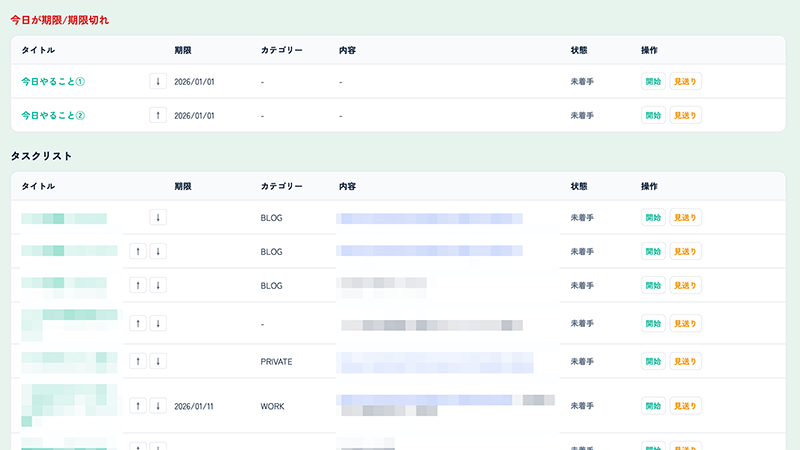
The first thing doloop showed you was what was due today or already overdue. Nothing else competed for the top of the screen.
Each task carried its due date, category, and state, readable at a glance, and I cut everything beyond that. Tasks moved through four states:
- Not started
- In progress
- Done
- Skipped
One button switched between them. “Skipped” mattered more than it looks: a habit tracker without an honest way to say “not today” turns every missed day into a failure state, and that is usually where people quit.
The design target was simple — you open it, you can see what to do now, and you start without deliberating.
Categories you define, not ones I chose for you
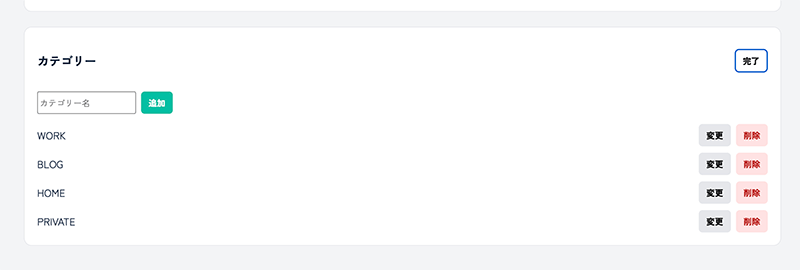
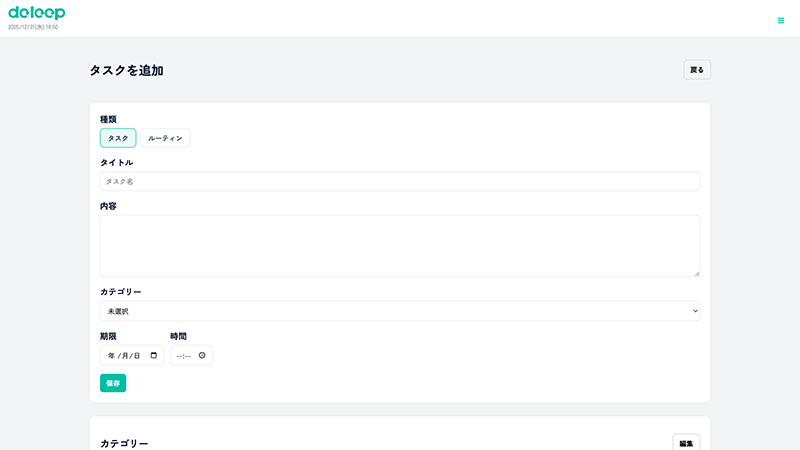
Users created their own categories. Work, home, whatever the shape of your week actually is — I did not ship a prescribed taxonomy for people to bend themselves around.
Filtering by category meant you could narrow the day down to one context: work only, or house only. That single filter did most of the organizational work that heavier tools spread across projects and saved views.
Routines, for the things that repeat
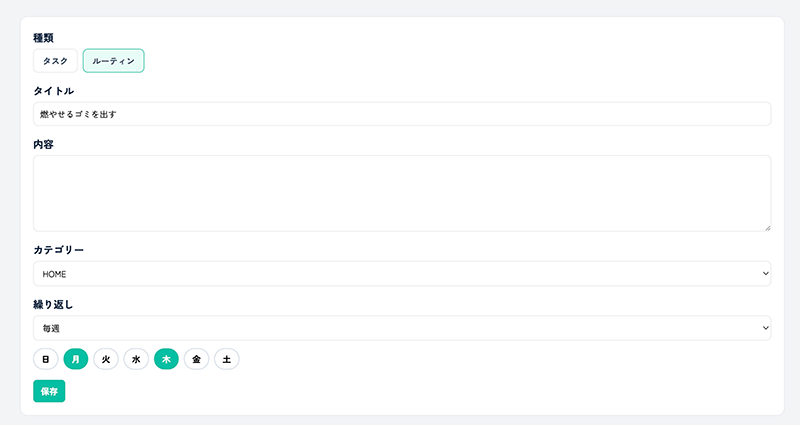
Alongside one-off tasks, doloop handled routines on daily, weekly, and monthly cycles:
- Daily cleaning
- Trash out on specific weekdays
- Monthly invoicing
Registering these once was meant to remove the deciding, not the doing. The time lost to recurring chores is rarely the chore itself; it is the daily re-litigation of whether to do it now.
The intent was steady rather than intense. Nothing in doloop pushed you to try harder.
Same state on every device
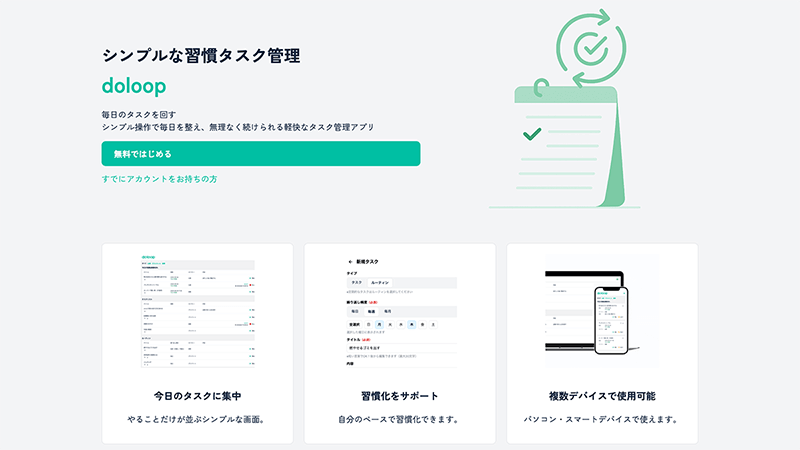
doloop shipped as a web app rather than a native one, usable from a desktop browser and a phone alike. The assumption was that you check something on your phone while out and pick it up on a computer at home, and that a daily task list is worthless if the two disagree.
Designed not to interrupt you
The clearest thing doloop was trying to be was not the center of your life.
So it had no notifications nagging you and no streak counters or achievement mechanics pushing you along. Those things work — that is exactly why I left them out. They work by making you feel bad, and a tool that manufactures guilt to keep you engaged is optimizing for its own retention, not your week.
What it did instead was put today’s items in a quiet list and let you put them away when they were finished.
Not “I have to stay on top of this,” but “one more thing done, keep it turning.” That distance was what I spent the build and the operation trying to get right.
Why this is still online
doloop is gone. I am leaving this page up because the design questions outlasted the product: how much structure a habit tool should impose, whether skipping a day deserves to be a first-class state rather than a failure, and what a tool owes you when it has nothing to sell you.
Those are still the questions I build against. The app that carried them is not running any more, and nothing on this page should be read as an invitation to go looking for it.