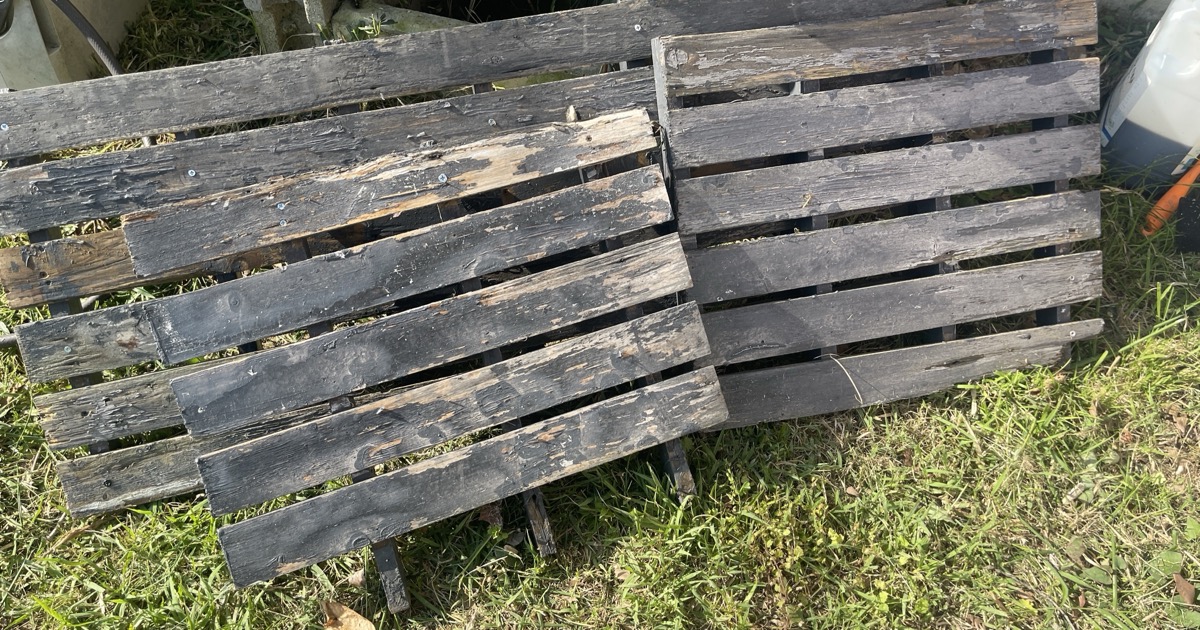
A wooden fence in my garden had collapsed. The black paint had flaked away, the ends of the boards had crumbled, and you could see the rot before you touched it.
When something breaks, the first thought is usually replacement. This time I decided to put my hands on it before throwing it out.
Originally published in Japanese on August 24, 2026. This English version was written in September 2026.
I build software for a living, increasingly with AI in the loop, and the two hours I spent on that fence turned out to be about my job.
A hot day, a cat, and something falling apart outside
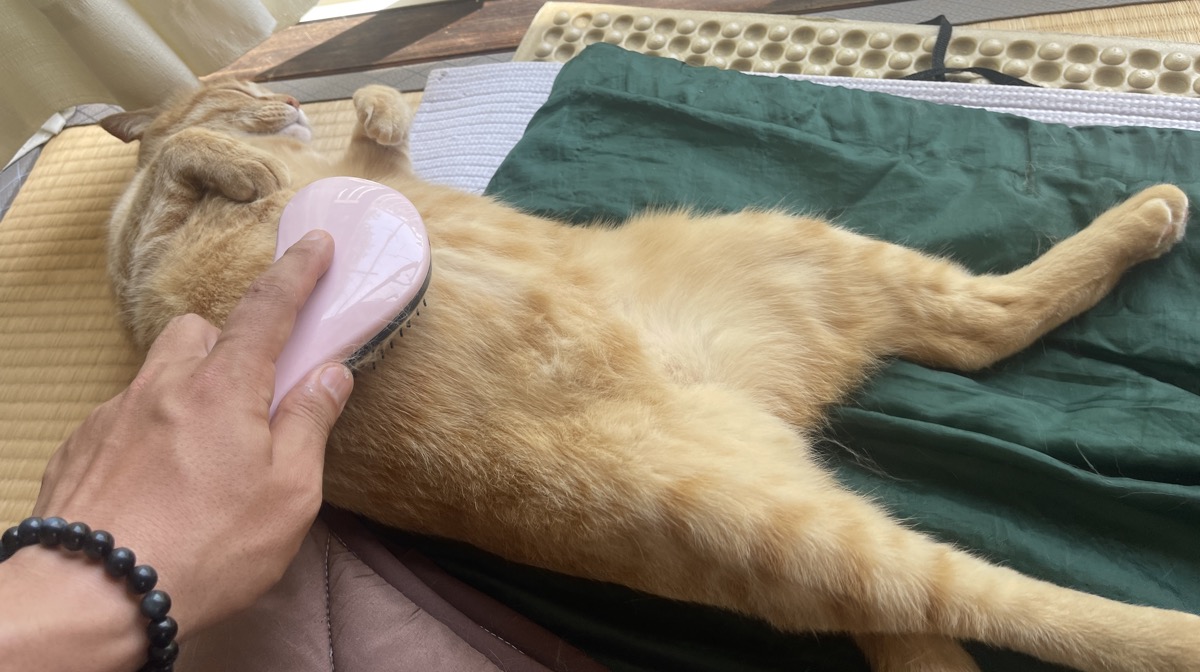
On hot days a cat is easy to read. Mine was stretched out full length on the tatami — the woven straw matting that floors traditional Japanese rooms, and reliably the coolest surface in the house — barely moving as I ran a brush down his back. Only the fur moved. He stayed put.
It was a calm hour. Out in the garden I had just been looking at the opposite of it.
The wooden fence I had put by the outdoor tap had come apart into separate pieces. Things left outside age on a different clock than the tools indoors. Rain falls. Wind hits. Sun bears down.
It did not look like one event had broken it. It looked like small daily loads had accumulated until, by the time I noticed, I could not lift it in one piece.
Things in the garden are always in view. That is exactly why you stop seeing them. The difference between yesterday and today is too small to register — slightly paler, a corner slightly gone, the shape slightly changed — and only the collapse makes the accumulation visible. It felt sudden to me. From the fence’s side it had been happening for years.
Taking it apart showed me the damage properly
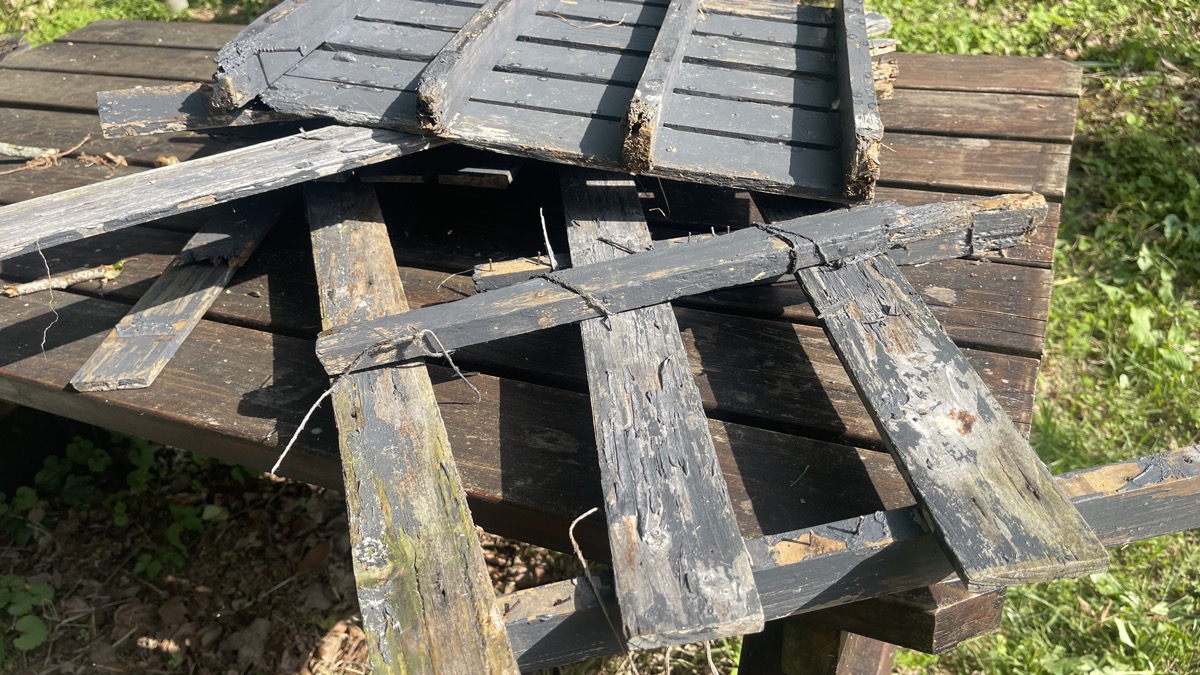
I separated the collapsed fence into its parts. Laid out, the black boards divided into two kinds: some damaged only on the surface, others eaten well in from the ends.
From a distance it had been a slightly old fence. Up close it was something else.
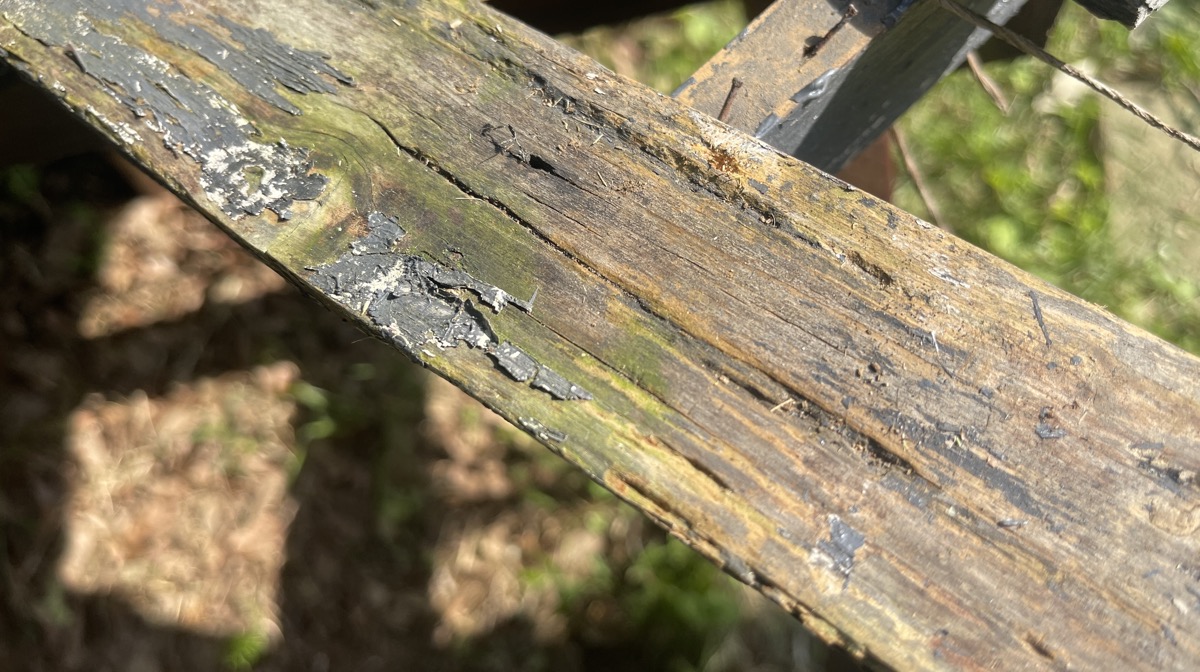
The paint had peeled thin, and the splits in the wood held patches of a different color. The surface was not uniform: some of it dry and hard, some of it I hesitated to get my fingers into.
That was the point where I accepted I could not return all of it to new. And then I lost confidence that returning it to its original state was even the goal.
Look at what can be saved, and make it into something usable again as a whole. For this job, that was enough of a definition of “repair.”
Deciding that changed how the work looked. It stopped being about hiding damage and became time spent finding out how far back from damaged I could actually get.
Before starting, all I could see was the broken parts. After taking it apart, I could see the parts still worth keeping. I would not have learned that without starting. From outside, the whole thing had looked finished.
Broken or not broken. Usable or throw it away.
Think in only those two and anything damaged slides quickly to the second. In reality there was a third option sitting between them: worth keeping, if you do some work.
Not binning it starts with getting the tools out
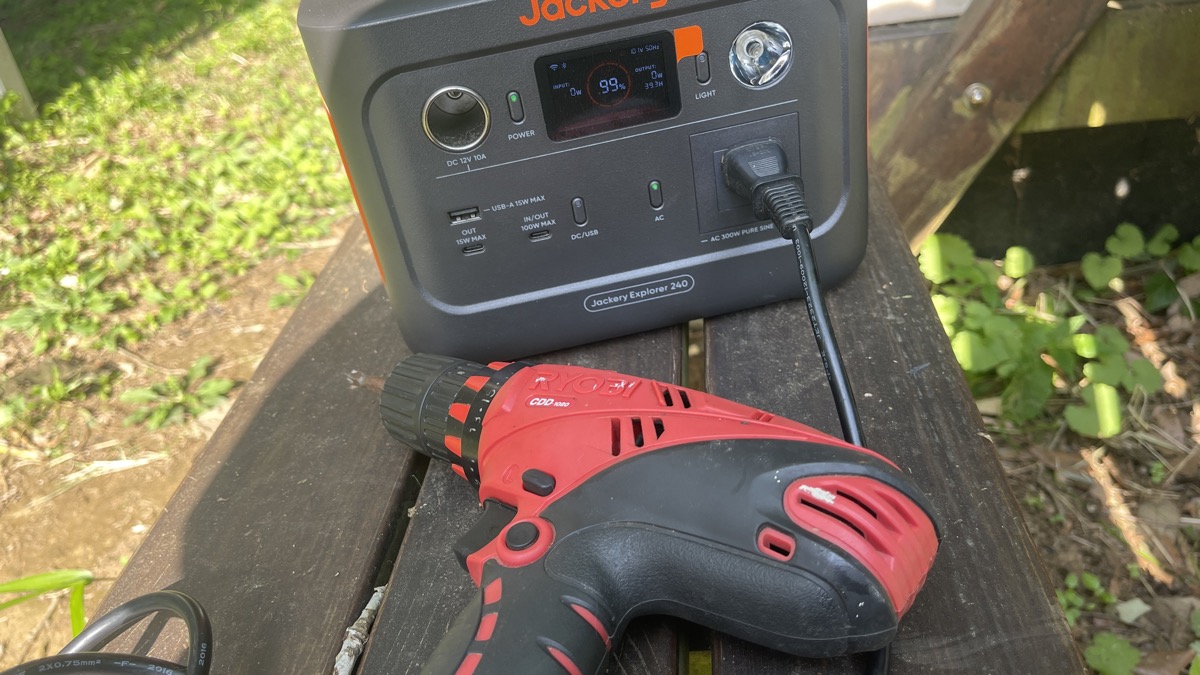
I carried a cordless drill and a portable power station out to the garden — a Ryobi driver drill and a Jackery power station I have had for a while, both visible in the photo.
Replacing it would have meant finding a product and placing an order. Repairing it meant getting tools out first, checking the damage, and working out what to keep.
It is a bit of a hassle. It does not finish quickly.
But the hassle is what makes you look closely at the thing in front of you. How the boards had split, how the paint had come off — all of it got more specific than it had been before I took the fence apart.
What to remove, what to keep, where to stop. Tools do not decide a repair. The tools moved the work along; choosing the scope of what survived was mine.
If I were writing this as a DIY procedure there would be far more detail. But what I wanted to keep is not a method for repairing something well. It is the small reluctance before carrying the tools outside, and the moment where looking at the damage changed my judgment. That process.
Repair contains something replacement does not: time spent looking at the thing again.
Not perfect, but usable again
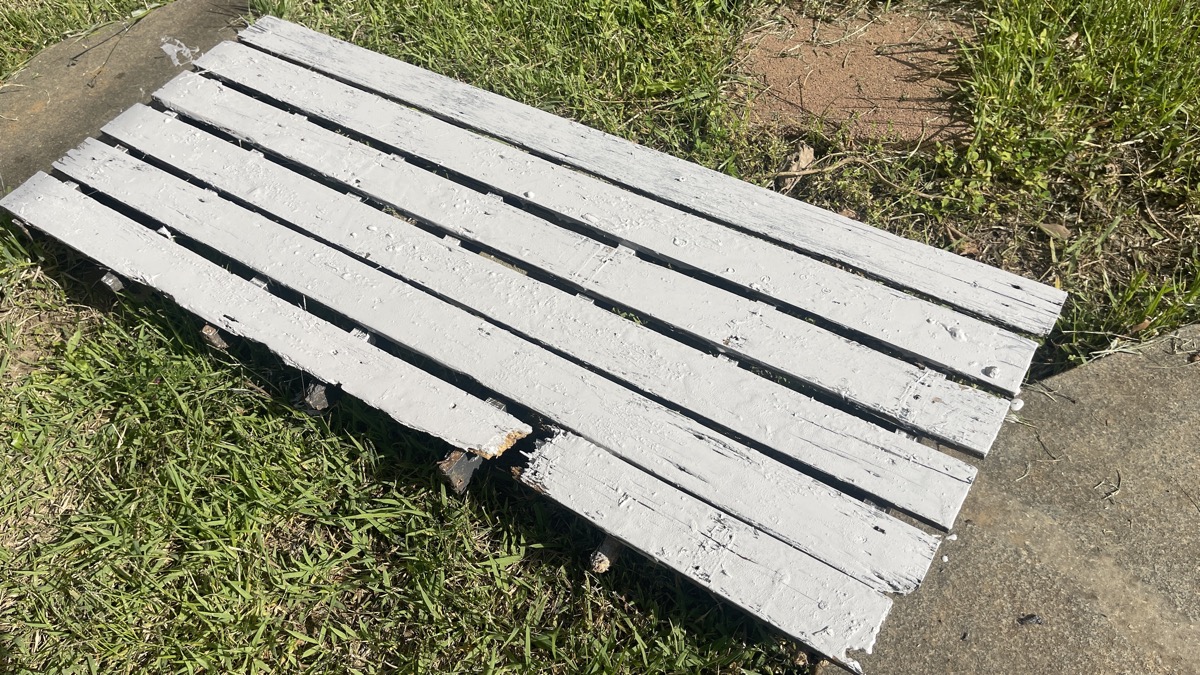
The repaired fence came back white. Not the black it had been.
The board widths do not match. The surface is uneven. The damage and the repairs are both still visible. It does not look new. But it is usable again.
Looking at it, I stopped thinking of repair as getting back to before it broke. You cannot make the time not have happened. The weather it took, the paint it lost, the fact that it once fell apart — all of that stays. What you do is build the next usable state on top of it.
This may not be limited to garden furniture. When you sort out how you live, it often starts by re-examining what you already have rather than replacing all of it.
I do not think keeping old things is automatically right, and I am not arguing for using something past its point. Some things are finished, and sometimes replacing beats repairing. This fence did not fully come back either.
Still — look at it once, touch it, and consider whether it can be kept. Not skipping that order is the part I was glad about.
I wrote something similar once about how rebuilding my daily routine left me not needing alcohol and caffeine (in Japanese). That was not about finding one big answer either. It was about changing how I handled the days.
Fixing things on the web is fast, and leaves no trace
I work as a web engineer, fixing interfaces and systems. Lately AI is in more of that work, and I can get from proposal to implementation to verification in less time than I used to.
Digital repair lets you erase the failed state and start again. Revert the code, swap the image, update what is published, and the hesitation and the working-out disappear from view.
That is a genuine help. It has saved me more than once.
The fence I fixed by hand keeps the decisions. The marks on the boards, the repainted surface, the color that no longer matches — none of it hides what I chose to keep.
I found the difference interesting.
I have written before about rebuilding my own site from scratch (in Japanese). That project had the same shape: a direction taken and then withdrawn, a screen that felt wrong and got killed, a restart in another form.
On the web, if you only look at the final screen, the reversals have been cleaned away. But the judgments about what to keep and what to discard were still made.
AI raising the speed of building does not automatically make those judgments correct.
When I use AI at work, it is easy to line up another draft, another implementation, another structure in very little time.
The more candidates there are, though, the harder it is to see what you did not choose. When moving to the next option becomes the goal in itself, you can delete the thing you originally wanted to keep.
So at work too, before starting a change, I check which parts must not change. Precisely because the environment makes building fast, I try not to skip that step.
A garden fence and a web project are obviously not the same thing. But looking at the state before repairing, and deciding what stays, was similar in both.
Choosing “use it carefully” again, in the age of AI
Right now, making things and fixing things are both fast. For objects you can find a new one; for digital work you can generate an alternative immediately.
I do not want to give up the convenience. I am not arguing for dropping AI and returning everything to slower methods.
But how fast you can do something and what you decide to keep are separate questions.
Because you can rebuild immediately, the decision to discard the previous version gets faster too. Because you can buy immediately, it is easy to skip the time spent looking at what is damaged.
This time I took the collapsed fence apart, looked at the damage, got the tools out, and repainted it. Through those hours the fence stopped being merely an old object. It became something I had decided, once, to keep.
I would not claim the repair made it more valuable than before, or that it will now last. What changed was how I see it. Before I noticed it had collapsed, it was one more piece of background in the garden.
After I took it apart, looked at the rot, and carried tools out to it, the fence became something I want to notice the next time it changes. Using something carefully may be less about the state of the object than about the attention of the person looking at it.
Caring for something is not only about preserving it in good condition. It is also about re-examining it when it is damaged, working on it if it needs work, and building a relationship where it gets used again.
Not restoring it, but making it usable again
The rotted fence did not come back as new. The repairs show, and so does the repainted surface.
I decided that was fine.
Not a perfect restoration, but a return to use. Not erasing the failure and the damage, but choosing the form that can survive past them.
Even in an era where AI helps with both building and fixing, what finally gets kept is decided by a person. After a few hours of work in the garden, that obvious statement got a bit more concrete.
Not only making things new, but working on them and continuing to use them. I expect to remember that every time I look at the fence.