
I updated the Codex app and briefly could not connect. The app I opened was not the one I recognized.
Codex had not been discontinued. On July 9, 2026 the Codex app merged into the ChatGPT desktop app for macOS and Windows, where it keeps its dedicated coding experience alongside Chat and Work.
Originally published in Japanese on July 10, 2026. This English version was written in September 2026, with prices and model lineup updated to current figures.
The more consequential change was inside: GPT-5.6 Sol, Terra, and Luna became selectable in Codex. If you use Codex daily, that is a prompt to revisit which work goes to which model — not just which app you open.
This records what I confirmed in my own environment on July 10, 2026. Rollout, plan, and workspace settings vary, so your screens may differ from mine.
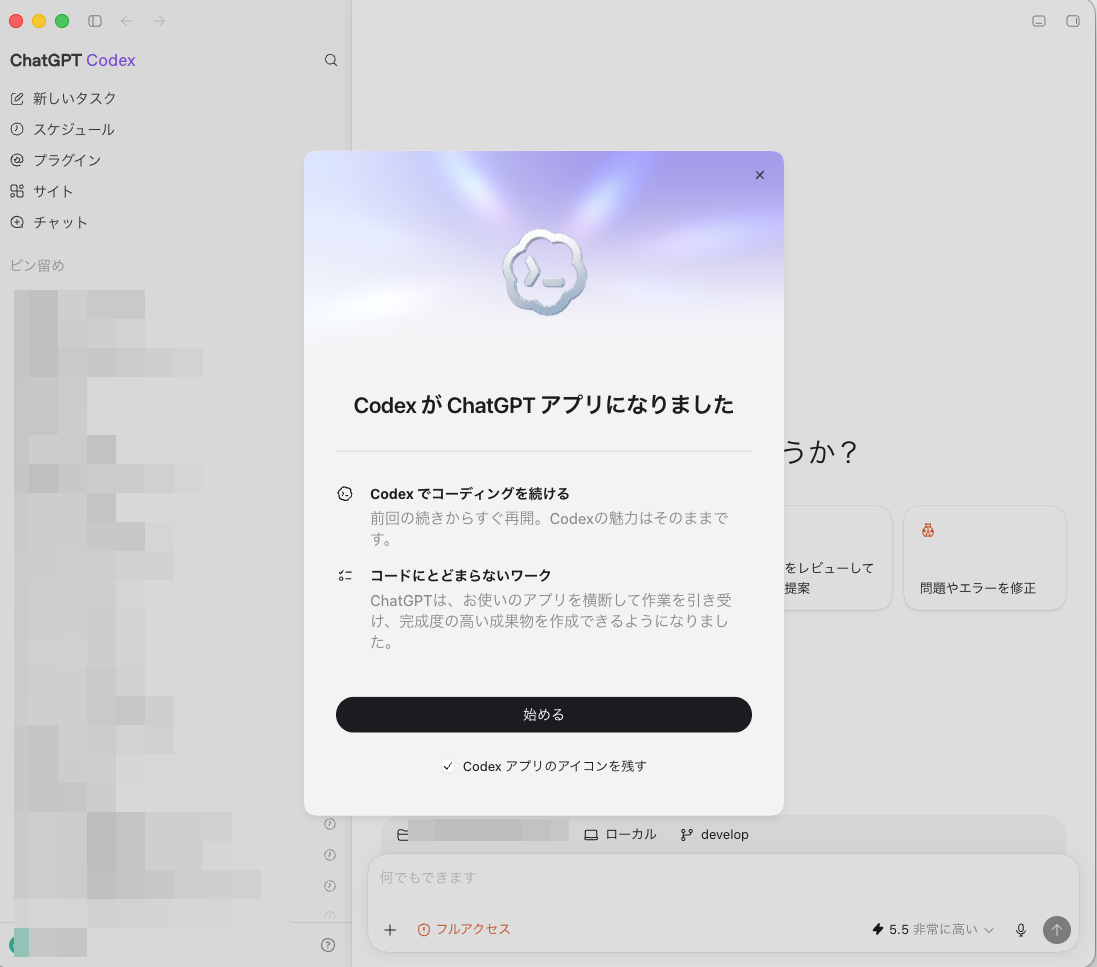
Codex is still there, inside a bigger app
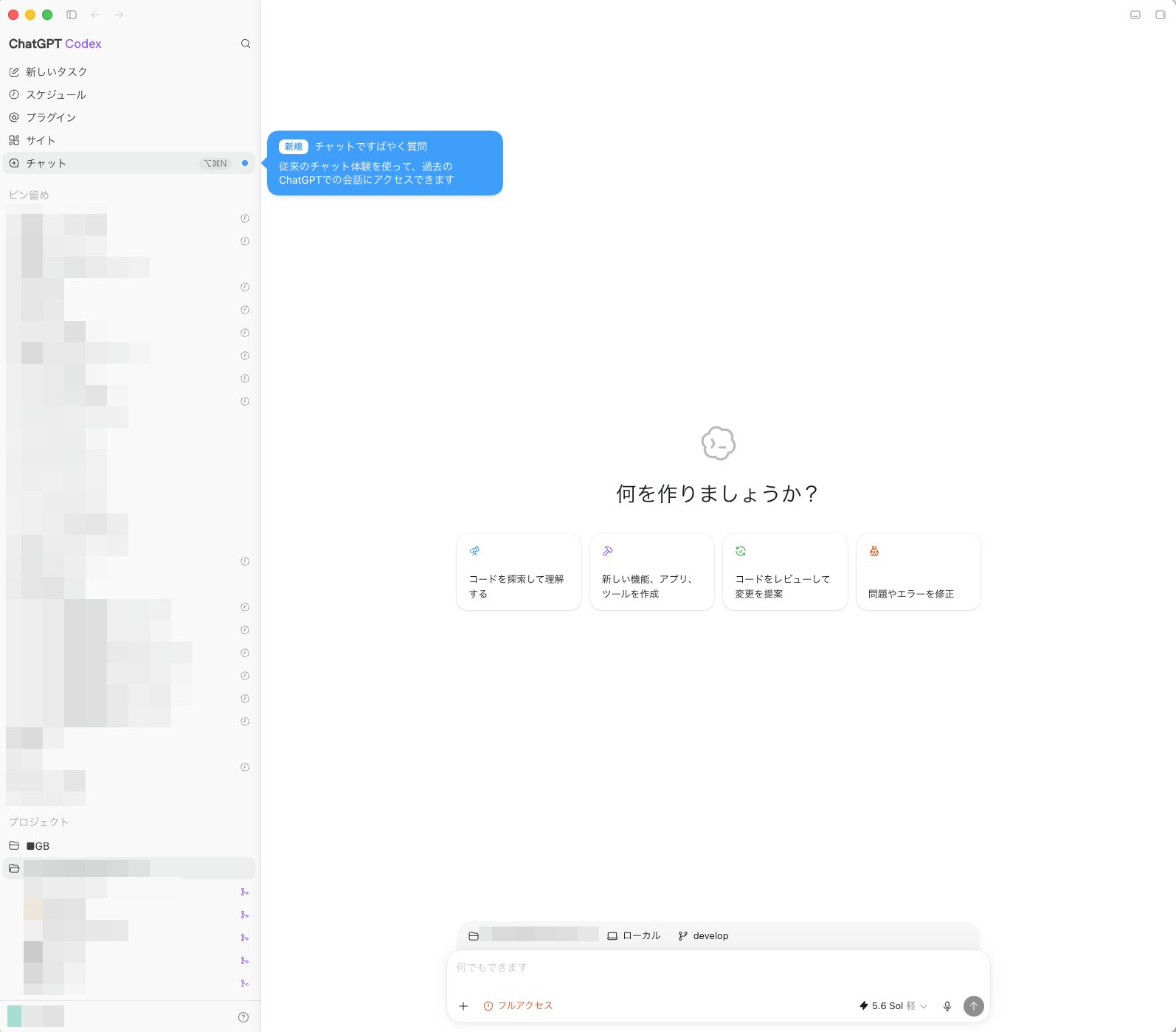
After the update, the sidebar still carries new tasks, schedules, plugins, sites, and chats. Existing Codex tasks and projects survive the move. The application around them is now the ChatGPT desktop app.
Three surfaces sit in one app. Chat is questions and conversation. Work — OpenAI describes it as a way to delegate real work to ChatGPT — handles research, analysis, briefs, slides, and recurring reports. Codex is the dedicated surface for software development and technical work, reaching local folders, repositories, terminals, and dev tools.
Work is a mode inside ChatGPT, not a separate product or billing plan. Worth stating plainly, because the naming invites the opposite assumption.
Ordinary chat now sits alongside your work
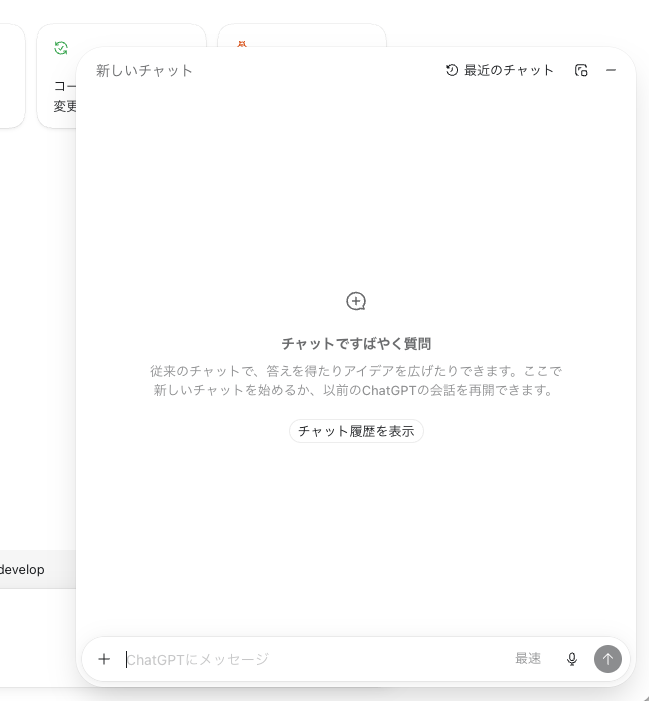
From a Codex screen you can open the sidebar’s chat; a new one launches as a modal. Small, but genuinely useful — a side question or quick lookup gets handled without leaving the app.
Mixing Codex work context with ordinary chat too freely makes it harder to say where a decision was made, so I keep them apart on purpose. Chat is short consultation, rephrasing, thinking out loud. Codex is the workshop.
Work and Codex are surfaces, not models
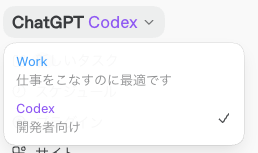
A menu at the top left switches between Work and Codex. This is not a model switch. It selects whether you are producing deliverables or doing development work, and sits on a different layer from choosing Sol, Terra, or Luna.
| Surface | Suited to | Examples |
|---|---|---|
| Chat | Questions, explanation, thinking out loud, short drafts | Lookups, rephrasing, quick checks |
| Work | Reviewable deliverables assembled from several sources | Research reports, comparison tables, slides, plans, recurring updates |
| Codex | Software development and technical work across a local environment | Implementation, review, tests, CLI, repositories, WordPress updates |
In my install, Chat is a separate item in the left navigation while Work and Codex switch from the title area. UI placement moves with rollouts and app versions, so treat that as an observation, not a specification.
Do non-coding tasks have to move to Work?
No. OpenAI states that people using Codex for non-coding purposes can stay in Codex or switch to Work.
My blog work does not end at writing prose. It reads local docs and AGENTS.md, leaves Markdown, verifies through the CLI, and spans GitHub and WordPress. Keeping that centered on Codex keeps the record and the verification connected.
If a task never touches the local environment or a repository and ends at a reviewable document, starting in Work is the more natural move. That is a fit judgment, not a claim that one is more capable.
Whether existing tasks can be freely converted between Work and Codex, I have not confirmed against official documentation.
GPT-5.6 in the Codex model picker
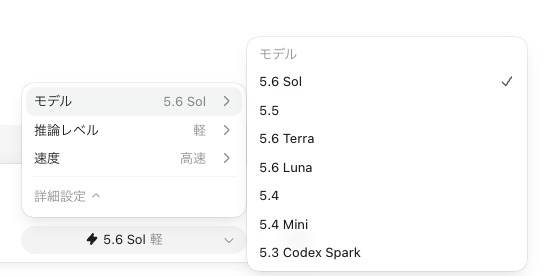
My picker listed 5.6 Sol, 5.6 Terra, 5.6 Luna, 5.5, 5.4, 5.4 Mini, 5.3, and Codex Spark. At the time, the ChatGPT desktop app was 26.707.31428 and Codex CLI was 0.144.1.
Using GPT-5.6 in Codex requires minimum versions of both the desktop app’s Codex mode and the Codex CLI. Availability also depends on plan, workspace settings, and rollout, with admin settings involved on Business and Enterprise. All I can report is that it appeared in my environment.
Officially, Sol is the most capable GPT-5.6 model, aimed at complex coding, computer use, research, and security work. Terra is the balanced everyday option, positioned as competitive with GPT-5.5 at lower cost. Luna is the fast, low-cost member of the family, suited to extraction, classification, conversion, and structured summarization.
Update for this English version: GPT-5.6 is no longer the top of the lineup. A model named GPT-6 Astra now sits above it in the official model list, and GPT-5.4 and GPT-5.4 mini retired from Codex on August 31, 2026. Nothing below changes as routing advice, but do not read “GPT-5.6 Sol” as “the most capable model available.”
How I split the work
| Task | First choice | Why |
|---|---|---|
| Ordinary Codex development | 5.6 Terra | A sensible starting point for daily work |
| WordPress drafts, docs tidying | 5.6 Terra | Balances prose and judgment |
| Complex design, unexplained bugs, pre-publication calls | 5.6 Sol | Judgment quality comes first |
| First-pass AI-news triage, link classification, table shaping | 5.6 Luna | Extraction and formatting are often enough |
| Light questions, speed, fallback when 5.6 is unstable | 5.5 | Kept as the previous instant tier |
Terra by default. Sol when stuck. Luna where the correct output shape is already fixed. That was a hypothesis on July 10, 2026, formed the day the picker appeared — not a conclusion from measurement.
Does 5.6 make things cheaper? Not by itself.
API prices per million tokens, standard processing, short context, as published in September 2026:
| Model | Input | Output |
|---|---|---|
| GPT-5.6 Sol | $4.00 | $20.00 |
| GPT-5.6 Terra | $2.00 | $12.00 |
| GPT-5.6 Luna | $0.20 | $1.20 |
These are not the figures in the original Japanese article. On July 10, 2026 the published rates were $5.00 / $30.00 for Sol, $2.50 / $15.00 for Terra, and $1.00 / $6.00 for Luna. Everything has come down, Luna dramatically. Sol’s current rate is also flagged as promotional pricing available at least through November 21, 2026, so it is not a stable planning number.
The ordering holds either way: Luna is cheapest, then Terra, then Sol. The useful conclusion is unchanged too — switching to 5.6 does not automatically cost less. Moving work off Sol onto Terra or Luna is where the API savings live.
And in the ChatGPT or Codex app, dollar-per-token is not the mechanism at all. Plan, allowance, reasoning level, speed setting, and workspace settings apply, and GPT-5.6 uses the existing ChatGPT limit structure. So the honest phrasing is: routing work away from Sol may relieve usage pressure. Not: 5.6 is cheaper.
Remote access from a phone survived the merge
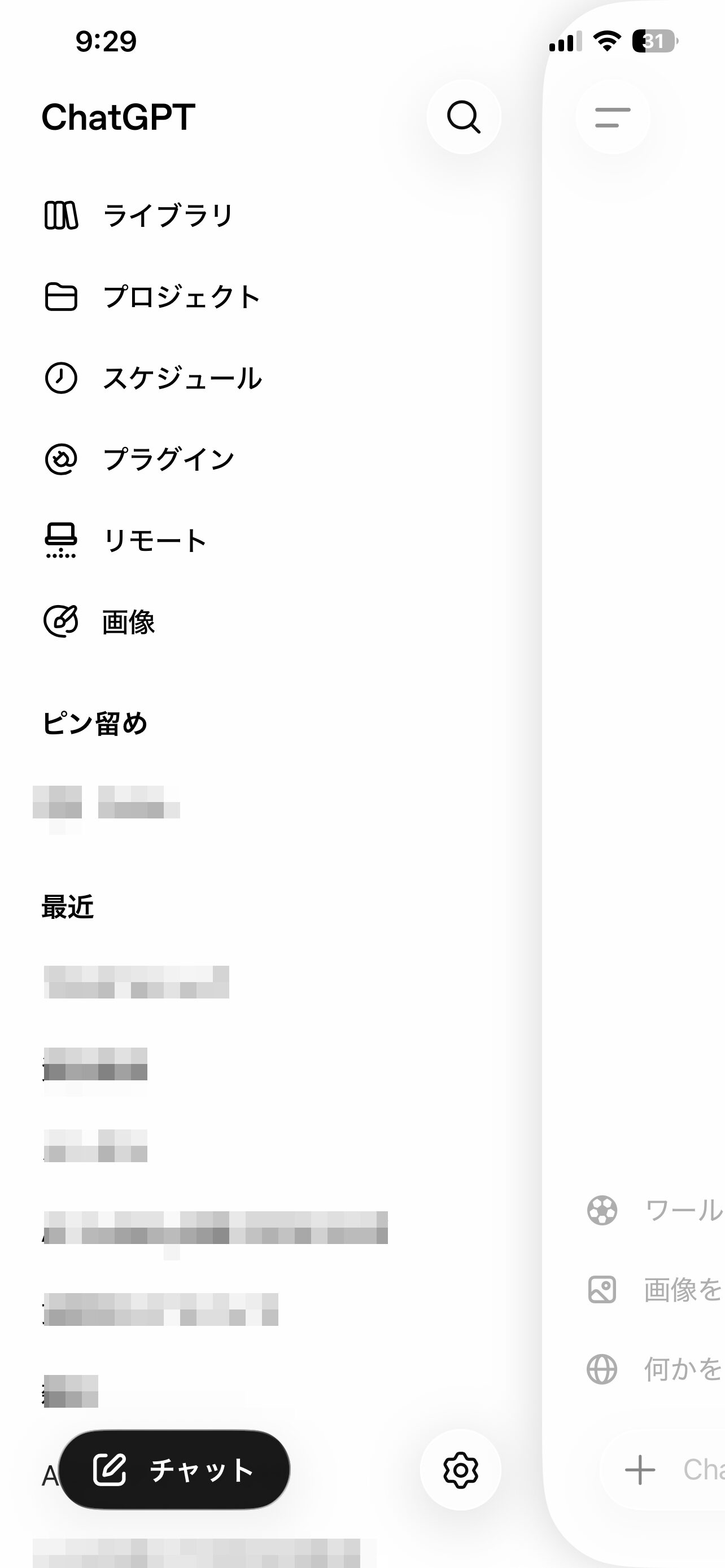
I run an always-on Mac mini as the host and check in from an iPhone or MacBook Pro, returning only decisions. That still works: remote connections let the mobile app reach work running on a connected macOS or Windows host.
Codex moving inside the ChatGPT desktop app does not change where the work happens. Local folders, terminals, and dev tools still run on the host Mac. The phone is a window onto it.
The unit of decision shifted from app to task
Codex merged into the ChatGPT desktop app on July 9, 2026. It did not disappear; it became a dedicated surface next to Chat and Work. Ordinary chat now runs beside it, and GPT-5.6 Sol, Terra, and Luna became selectable.
Which leaves a better question than “which app do I open.” Which work goes to Codex. What finishes in Chat. Where you start on Terra and when you escalate to Sol. What can drop to Luna. How the always-on host and the phone divide between them.
If you use Codex daily, checking how you split the work — and the state of the machine it runs on — beats tracking which model is newest.
References
- ChatGPT Learn: what’s new, including the Codex app merge
- Get started with Work (ChatGPT Learn)
- Use ChatGPT (ChatGPT Learn)
- Model list and descriptions (ChatGPT Learn)
- OpenAI API pricing
- Remote connections (ChatGPT Learn)
- Routing work across GPT-5.6 Sol, Terra, and Luna
- codex-healthkit: a local health check CLI