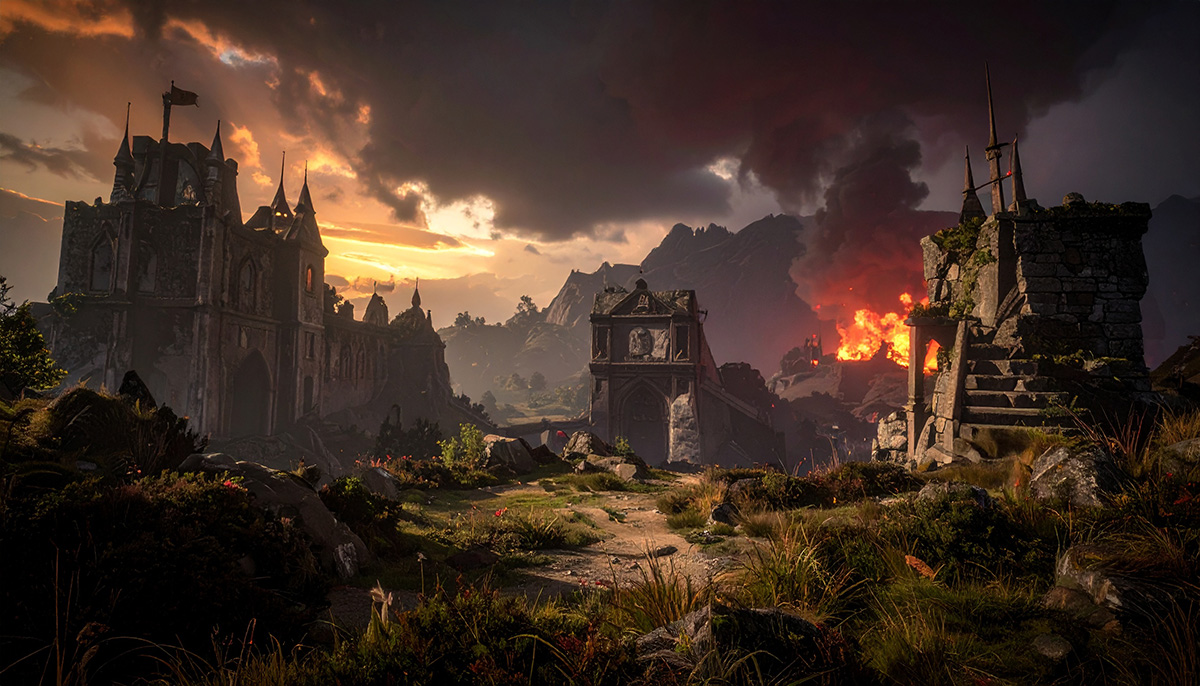
Claude Fable 5 worked for a few days. Then it stopped — while still sitting in the model picker.
On June 13, 2026, Fable 5 was listed in Claude Code on my machine. I could select it. Running anything returned There's an issue with the selected model (claude-fable-5). It may not exist or you may not have access to it. Run /model to pick a different model.
Originally published in Japanese on June 14, 2026. This English version was written in September 2026 and re-checked against Anthropic’s current documentation.
My first guesses were my plan, my environment, or a transient Claude Code bug. None of those. Anthropic had disabled the model for every customer, following a US government export-control directive.
It came back on July 1. But the episode made something concrete that is easy to treat as abstract: for a frontier model, availability is not a function of capability. It is a function of policy, jurisdiction, and compliance — and it can change overnight.
Note for readers arriving later: Claude Fable 5.1 and Claude Mythos 5.1 have since shipped on top of these models, Fable 5 itself has moved to the legacy list in Anthropic’s model documentation, and the plan rules described below have been revised more than once. Everything here is the June 2026 episode as it happened, with corrections marked; for current access conditions, read Anthropic’s plan documentation rather than this article.
The timeline
| Date (2026) | What happened |
|---|---|
| June 9 | Anthropic announces Claude Fable 5 and Claude Mythos 5; Fable 5 included on Pro, Max, Team and seat-based Enterprise plans at no extra cost through June 22 |
| June 12 | Anthropic publishes its statement on the US government directive; access suspended |
| June 13 | In my environment, Fable 5 is listed and selectable but errors on use |
| June 30 | Anthropic announces the export controls have been lifted |
| July 1 | Fable 5 available globally again on Claude Platform, Claude.ai, Claude Code, and Claude Cowork |
| July 19 | End of the no-extra-cost promotion (11:59:59 PM PT), after an initial June 22 date and a July 7 date announced on June 30 |
Everything below the observation about my own machine comes from Anthropic’s published statements, linked at the end.
What Fable 5 was positioned as
Anthropic announced Claude Fable 5 and Claude Mythos 5 on June 9, 2026. The framing was that the two share a base model, and Fable 5 is the version made broadly available with safety classifiers in place — Mythos-class capability, safety-gated for general use.
The claimed strengths were software engineering, long-horizon tasks, knowledge work, vision, scientific research, and long context. The API documentation described Fable 5 as the broadly available model for the most demanding reasoning and long-running agentic work.
API model IDs: claude-fable-5 and claude-mythos-5. Fable 5 shipped on the Claude API, Claude Platform on AWS, Amazon Bedrock, Google Cloud Vertex AI, and Microsoft Foundry. Mythos 5 was restricted to approved customers through Project Glasswing.
So the structure was: Mythos 5 as the limited-release version that can operate in genuinely dangerous territory, Fable 5 as the same capability with guardrails, released broadly.
“Generally available” came with unusual conditions
Worth separating out, because “generally available” implied more freedom than it delivered — and the first condition was a deadline, not a technical constraint. The launch announcement said Fable 5 was included on Pro, Max, Team, and seat-based Enterprise plans at no extra cost from June 9 through June 22 only, and would be removed from those plans on June 23, after which using it required usage credits. A fourteen-day inclusion window is not what most people hear in “generally available.” In fairness, Anthropic framed it as a staged capacity rollout rather than a hard cutoff — the same paragraph says “if capacity allows, we’ll extend the included window” and that they aimed to restore Fable 5 as a standard part of subscription plans. Which is roughly what happened: the window moved twice before the promotion finally closed on July 19.
Per the API documentation, Fable 5 also carried:
- Safety classifiers on Fable 5 specifically, returning HTTP 200 with
stop_reason: "refusal"when a request is declined - 30-day data retention
- No zero-data-retention availability unless expressly authorized by Anthropic
- Designation as Covered Models
If you are integrating against a compliance requirement, the retention terms alone rule this out of some architectures. Broadly available, yes. Interchangeable with a normal Claude model, no.
My hands-on impression, with the caveats attached
I used Fable 5 for a few days: building an iOS app, building a website, and modifying an existing site. It felt strong.
Not simply “it emits code.” It held the coherence of a whole screen. It kept the thread of a task. It noticed small UI breakage. Over longer stretches of work it degraded less than I expected.
The caveats matter: a few days of use, no benchmarks, one environment, my kind of work. What I will say is that in tasks that mix design, UI, implementation, and verification — iOS and web work especially — it behaved less like an autocomplete and more like an operator that steps forward on its own.
Listed, selectable, unusable
On June 13 it broke in the most confusing way available: still in the model list, still selectable, erroring on execution.
From the user’s seat you cannot tell a misconfiguration from a plan restriction from a service-side action. The UI said one thing and reality said another. That gap is worth naming, because it is the state that sends you debugging your own machine for an hour.
The official reason: a US government directive
Anthropic published a statement dated June 12, 2026. Per that statement, the US government, citing national security authorities, directed Anthropic to suspend all access to Fable 5 and Mythos 5 by any foreign national — inside or outside the United States, including foreign-national Anthropic employees. Anthropic says it received the directive at 17:21 ET on June 12, and that to ensure compliance it had to urgently disable both models for all customers.
Other Anthropic models were unaffected. That matches what I saw: Fable 5 and Mythos 5 went down; Opus and Sonnet kept working.
On the trigger, Anthropic’s statement says one potential jailbreak was shared with the government. The June 12 statement does not name who reported it. Anthropic named the source eighteen days later: the June 30 post says the directive “came after the government became aware of a report in which Amazon researchers had found a method of bypassing Fable 5’s safeguards.” Anthropic characterizes what was shared as a narrow, non-universal jailbreak that essentially consists of asking the model to read a specific codebase and fix any software flaws, a capability it describes as widely available from other models.
Anthropic also describes the safety work done before release: thousands of hours of red-teaming against Fable’s safeguards with the US government, the UK AISI, multiple private third-party organizations, and internal teams, with the claim that those safeguards test substantially more effective than those of any previously deployed model, backed by a defense-in-depth approach that pairs narrow jailbreak resistance with monitoring.
So: the government judged suspension necessary on national security grounds; Anthropic argued the basis was narrow relative to pulling a commercial model. From outside, I am not in a position to adjudicate that. What is observable is that the boundary between “capable enough to be broadly useful” and “capable enough to be a security question” became a live political matter within days of launch.
It came back on July 1
On June 30, 2026, Anthropic announced the export controls on Fable 5 and Mythos 5 had been lifted, and that Fable 5 would be available the following day — Wednesday, July 1 — to users globally on the Claude Platform, Claude.ai, Claude Code, and Claude Cowork. Mythos 5 did not come back on the same terms: access was restored only for a set of US organizations, following US government approval on June 26.
Fable 5 was included in up to 50% of weekly usage limits on eligible plans through July 7, after which it became available via usage credits. Cloud availability lagged: AWS, Google Cloud, and Microsoft Foundry were described as restoring access as soon as possible rather than being live on July 1.
That July 7 date moved again. Anthropic’s help center now records the no-extra-cost promotion as having ended on July 19, 2026 at 11:59:59 PM PT, applying to Fable 5 only. If you are reading a contemporaneous account of this episode — including the paragraph above — check the current plan documentation rather than the announcement, because this particular date was revised twice.
So the conclusion of this story is not “Fable 5 disappeared.” Availability was restored within about three weeks. That is the good news and, in a sense, also the point.
Treat model access as part of the specification
The practical takeaways I kept:
- Presence in a model picker is not availability. Check for actual execution, not listing.
- Do not hard-pin a model name. In API code, make the model configurable and give it a fallback path.
- Distinguish “unavailable” from “broken.” An access error at the provider looks identical to a local misconfiguration unless you go and read the provider’s status.
- Read the operating conditions, not just the benchmarks. Retention terms, refusal behavior, regional availability, and usage accounting decide whether a model fits a workflow.
- Do not build a workflow that only works on the newest model. Have somewhere to fall back to when it stops.
If you are using AI as a continuous working environment rather than a chat window, this is a design concern, not a news item. Handoffs between threads, escape hatches when something stalls, and where the human decision points sit all need to survive a model going away.
Summary
Claude Fable 5, announced June 9, 2026, shared a base model with Mythos 5 and added safety classifiers so it could ship broadly. In my few days with it, on iOS and web work, it was noticeably strong.
On June 12, Anthropic suspended access to both models for all customers under a US government export-control directive citing national security. By June 13 my Claude Code environment was in the “selectable but unusable” state. On June 30 the controls were lifted, and Fable 5 returned on July 1.
This was not a model outage. It was a demonstration that frontier model availability now depends on export control, jurisdiction, nationality, and government judgment as much as on engineering. Plan for the model you are using to become unavailable, and check what your workflow does when it happens.
References
- Claude Fable 5 and Claude Mythos 5 | Anthropic (June 9, 2026)
- Statement on the US government directive to suspend access to Fable 5 and Mythos 5 | Anthropic (June 12, 2026)
- Redeploying Fable 5 | Anthropic (June 30, 2026)
- Introducing Claude Fable 5 and Claude Mythos 5 | Claude API documentation — refusals, 30-day retention, Covered Model designation, cloud availability
- Claude Fable models on your plan | Claude Help Center — the current plan rules, and the July 19, 2026 end of the promotion
- Manage usage credits for paid Claude plans | Claude Help Center — how the credits mechanism itself works
- claude-code issue #68128 — the same error message, filed June 13, 2026, if you want to confirm the symptom was not local